


33 Ways to Make 2024 Your Best Year Yet
33 Ways to Make 2024 Your Best Year Yet
Fewer resolutions. More resolve. Increase your daily level of optimism. AMAZING things will start to happen! Be a lamp. Or a lifeboat. Or a ladder. Mean people suck. Don’t become one of them. Not even for a second. Write more. Journaling, blogging, morning pages, notes to friends and loved ones. Feature and leverage other people.

Who Should You Exclude?
Today’s topic – being exclusive. Have you thought carefully about that term? It’s great because it means you get to exclude people – the wrong people… The clients, projects, and audience you DON’T want to work with… One of my favorite business quotes of all time is from my hero, Tom Peters: “Choose damn carefully.

Marketing Plan? Hell No – Do This Instead
Do you need a 60-page marketing/business plan with charts and graphs and financial projections for the next 5 years? No you do not. You need some flip charts, markers, paper, plenty of wall space and at least an hour to map out: Your business and marketing objectives and strategies Your current and future revenue streams
Think vs. Doing for Your Marketing Success
As a marketing mentor for consultants, speakers, and experts, I’m often asked some variation of the following questions: What’s more important – a focused marketing plan or consistent marketing activity? Do I need to change my marketing strategy? What should I be doing more of – and less of – to get more clients? How

Stop Brokesplaining
When you’re broke – and you’re giving me all the crazy reasons you’re broke and why being broke is noble and why you have to stay broke… Listen to your self-talk: I’m not worthy, I’m not good enough, I can’t find the good clients… STOP IT Here are 7 strategies to help you change that
33 Quick Tips for Marketing Success
Time for a little motivation. I don’t mean woo-woo motivation. I mean motivating you into inspired intelligent action. And specifically, I want to help you take inspired action to start marketing more smartly, easily and consistently. I know you’re super busy. So I distilled each of these tips into 3 words each. Ready? Here we

This Is the No-Ego Zone
Onto today’s topic du jour… EGO. As speakers, consultants, and experts, we MUST take ourselves out of our marketing messages. Nobody cares about YOU. The only thing they MIGHT care about is you IN TERMS of THEM. What problems can you help them solve that others can’t, won’t, or don’t know how to? How are

Is Your Expertise “Essential”?
You know it is! And I know it is. But do your clients know how essential your programs, services, consulting, coaching, and training are to their survival and success? And how recession-proof is your expert-based business? Is your content a must-have or a nice-to-have? Are your distribution methods subject to cancellation and postponement? Do you have a real strategy or just
Speaking is NOT Dead
Too many of my esteemed competitors would tell you that speaking is dead – time to move on. Here’s what that argument sounds like: You used to be a speaker, huh? Gosh – I guess Covid-19 wiped you out. No events – no meetings – no training. Bummer – so here’s what you need to

The 4 Levels of Marketing
When it comes to marketing, there are four things that you need to focus on, four levels if you will. The four levels of marketing are: Strategy Tactics Initiatives Action steps When you hop on a webinar, when you ask your mastermind group for help, even when you start searching the web for answers and

Use Testimonials Wisely
Testimonials are among the most powerful marketing ammunition in your marketing arsenal. Testimonials have the power to achieve a variety of things for your marketing and client retention goals. Each time you use a testimonial you need to decide what you are trying to accomplish or what message you are trying to support. For example,

What COVID-19 *Should* Mean to You and Me
No doubt about it – our world has turned upside down and inside out with the global Coronavirus pandemic. Despite the disruption, unemployment, illness and loss – as experts, now is the time for us to lead more – help more – serve more – and redefine what it means to be a thought leader

17 Reasons to Serve the Top of Your Market
What’s the difference between a professional practice (or company or expert) that feeds on the bottom vs. YOUR business model which should aim to serve the top of your market? Here are 17 things to consider: High fees are paid by clients and customers who are doing well, not those who are struggling Referrals come
7 Things Entrepreneurs Must Do Daily
Here are the top 7 things that entrepreneurs, business owners, and independent professionals must do every single day: 1. Revisit your goals, milestones, and metrics for the day, week, month, and quarter (financial, marketing, sales, operations)… Ramifications if not done daily – you lose sight of the big picture and get pulled off your game by distractions, trivia,

7 WTFs For You
This week has brought a tremendous ability to focus my mind. What does my focused mind like to do? Five things: Sell stuff Help our clients sell stuff Record videos about selling stuff Talk to my smart friends about how THEY sell stuff Make up funny subject lines for your enjoyment :o) Here’s what made

Let Go So You Can Grow
As a marketing speaker and marketing mentor, I often work with clients who are seasoned entrepreneurs. They’ve been doing great work for good clients for years – sometimes decades. And in the technology world, they call these longtime clients who are using your longtime services “legacy” clients. Here’s the problem – legacy clients can hold

Why Those IDIOTS Don’t Buy from You
Have you ever wondered why your prospects DON’T buy from you? Especially when you can see as plain as day that they DESPERATELY need what you do — and could benefit from it HUGELY? Well… as with most marketing – it’s not about YOU. It’s about THEM. And your prospects are not actually idiots –

How to Design a Client-Magnet Presentation
I see too many speakers, consultants, and thought-leading executives who commit to a speaking strategy built around their professional passions, interests, or favorite topics within their expertise. Sounds like common sense, right? Well, that would be a huge mistake. DON’T do it! For your speaking efforts to pay off in terms of marketing results, you

5 BIG Reasons Thought Leadership Marketing Matters
Marketing used to be about “getting in front of” prospects, delivering your pitch, and making the sale. Today, buyers increasingly distrust marketing “claims” and expect businesses to show, not tell, when demonstrating their products and services. They shun self-serving salespeople and seek businesses that focus on making a difference, not getting a sale. Thought leadership centers on

This Guy Is An Idiot
I wanted to tell you about a situation that REALLY boiled my buns… It’s about how NOT to create your private coaching program – and the exact kind of idiot who should NEVER set up shop as a coach or mentor to others (which is our main business, as you know…) I hate to embarrass

Marketing Coach: 7 Stupid Ways to Blow Up Your Sales Process
This week’s Marketing Jackass Award goes to… me. Why? Because I just conducted one of the WORST sales calls of my life. Yes, it was that bad. Let’s count the ways so that YOU can apply these 7 lessons to YOUR sales process. And so you never have to blow it like I just did.
Small Business Marketing: 63 Ideas to Help You Sell More Right NOW
There are only three problems that you, as a small business owner, entrepreneur or professional service provider, are ever going to be in a position to solve. You may sell the world’s greatest widgets… You may have patented the most efficient doo-dad your industry has ever seen… Your flagship service may be the most effective

33 Great Questions to Get Your Business Unstuck
How can we offer a risk-free trial of our product/service? What would make our work more fun? Which of YOUR talents and capabilities would you like to use more of? How can we do better in generating inbound leads? What should we be doing more of? What should we be doing less of? How can
7 Reasons Your Email Marketing Sucks
Have you noticed? Email open rates are down – click through rates are down – and sometimes, no matter how large your subscriber list may be, you find yourself asking, “Is anybody out there?” Bad news: Chances are that if you’re doing email marketing the same way that you were doing it 10 years ago,
How to Get More Speaking Engagements
Watch this video about how to get more speaking engagements: How to get speaking engagements. I wonder: How do you get speaking engagements? All right, let’s break this down at the macro level. Macro level how to get speaking engagements. How do I get speaking gigs? The first thing that you have to work on is
Marketing Speaker: How to Generate Leads at EVERY Speech
Here’s a step-by-step method (and word for word script) on how professional speakers, authors, consultants and thought-leading professionals like YOU can generate leads from speaking to groups of your target market. Take a look: THIS is the approach you MUST take every time you stand up to speak so that your speaking generates MORE leads,

Marketing Concept: Don’t Be a Jackass
Wow. That’s all I can say. Sometimes, a piece of marketing stupidity comes across my radar that is: a. Almost impossible to believe b. Too dumb not to share with you as a cautionary tale Here’s an email I just got from a video producer whom I personally KNOW* (and who shall remain nameless to

50 Shades of Pay
Strap in and hang on – you are getting the mother lode of product development ideas right here in this post. Yes, that’s right – below are 50+ ideas to help you productize, monetize and distribute your expertise. Why is this important to you? (Yes, MORE important than reading about 50 shades of whips, handcuffs
Marketing Coach: How to never feel cheated about referrals
Too many small and solo business owners get bent out of shape about referrals – they don’t get enough, or they give too many that go unappreciated, or they expect payment without ever asking for payment or making their expectations clear. It’s just a mess.So to help YOU avoid disappointment on both sides of the
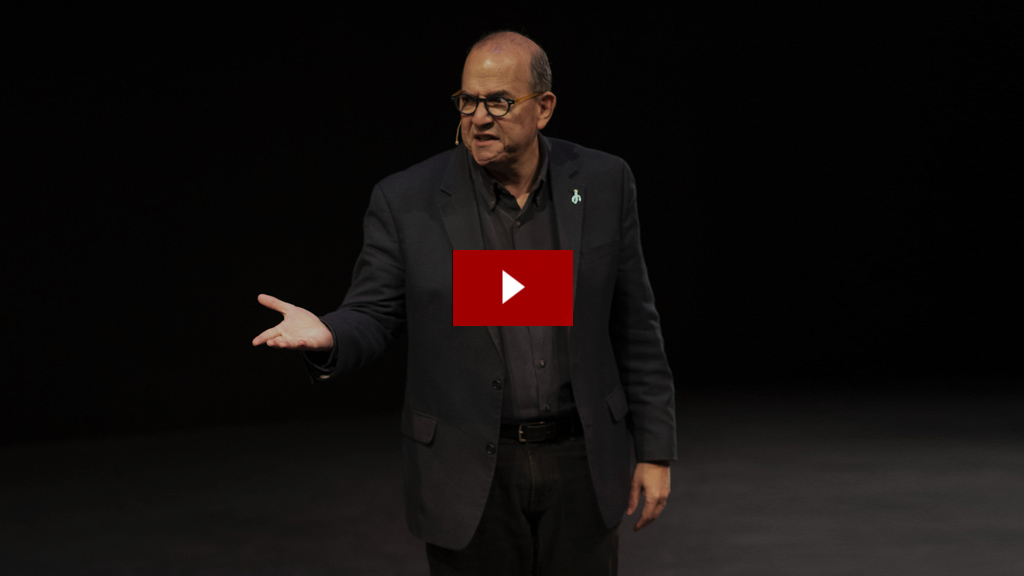
David Newman: Speaker Video
“If you want to accelerate and boost your sales, the best thing you can do is show your clients and prospects. Don’t tell what you can help them with. Show them.” Thought leadership marketing. What is that? Well, I have good news and I have bad news. Really, that’s the only kind of marketing that’s
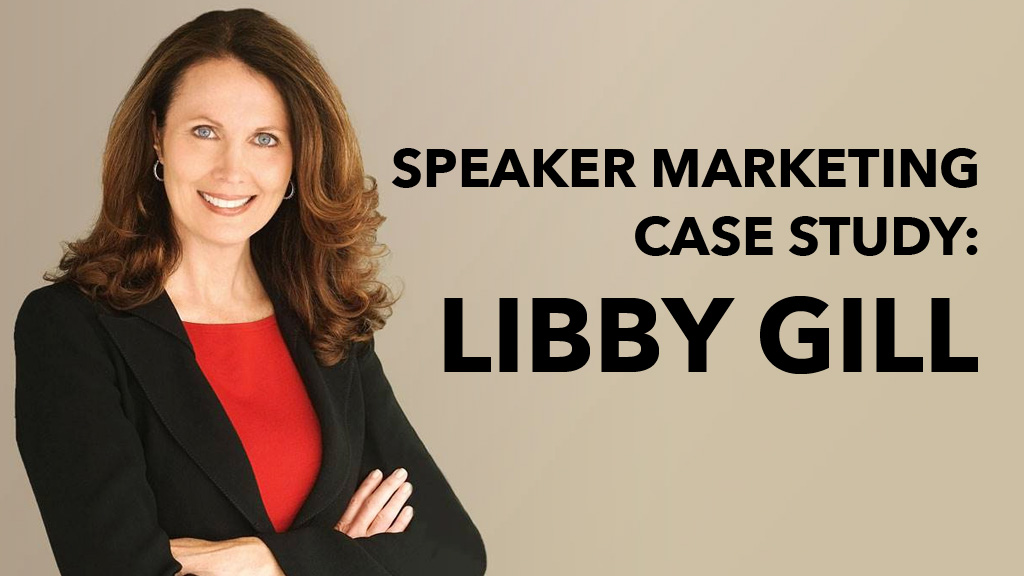
Client Case Study: Libby Gill
“I would have happily paid double your fee!” Libby was already a highly successful speaker when she joined the program, but as she says, who doesn’t want to learn how to get more bookings and higher fees?! Listen to her story above. Highlights: “I can make in one hour as a speaker what I can
Client Case Study: Steve Bollar
“I’ve made over $70,000 in 6 months – just through this” As a former school principal and superintendent, Steve was speaking part time and didn’t have direction or clarity in his speaking business. He used money from his house to join the program and he’s so glad he did! Listen to his story above. Highlights:
Market with Your Mouth: How to Use Speaking to Get Clients
Here is an in-depth interview about how entrepreneurs, executives, business owners, coaches, and experts can unleash a flood of new clients using the power of speaking. Q: What does it mean to Market with Your Mouth? David Newman: A lot of business owners work hard to interrupt people with cold calling, advertising, and spam. That
Client Testimonial: Alfred Poor
“The $11,000 man who’s finally charging for value” Alfred is a true renaissance man who could not get traction monetizing his expertise, Until now. Listen to his story above. Highlights: “Extremely effective at innoculating us from the low fee/no fee speaking trap” “Absolutely laid out a path for me that was clear so I knew
Client Testimonial: Mike Thomson
“$225,000 in sponsors and new fee is $6,500” Mike is a 30-year speaking veteran, specializing in education who pivoted to business. Listen to his story above. Highlights: “I’ve talked to 2.5 million people but I was always hunting my next wabbit” “Increased my business ten-fold” “I had to drill down to become a real problem-solver”
Client Case Study: Kathy Parry
“From sporadic $500 gigs to regular $6,500 gigs” Kathy was up against competition from giant corporations and was struggling to get regular gigs and break past an $800 fee – until now. Listen to her story above. Highlights: “I was up against competition from giant corporations and I needed a shift.” “I was pigeon holed

Marketing 1.0 vs Marketing 2.0
Marketing 1.0 Cajole convince persuade chase sell beat up interrupt intrude close close again stalk give up No wonder you’re exhausted… Marketing 2.0 Solve answer enlighten equip fix listen nurture connect engage attract entice invite buy So much better… Here are two visual reminders for you. Please share them, post them, pin them – and
Client Testimonial: Sardek Love
“This program changed everything for me” Sardek already had a training business but he wanted more speaking and more money. Listen to his story above. Highlights: “This program got me onto the international speaking circuit” “I went from charging $1,500-$2,500 to immediately jumping my fee to $7,500 on my way to $10K” “Looking at other
Client Testimonial: Susan Robertson
“From free to $7,500 to $30,000 in 60 days” Susan is an accomplished corporate consultant who hadn’t cracked the speaking code – until now. Listen to her story above. Highlights: “I’d gotten burned before but this felt different” “Frankly, I was thinking about giving up” “Worth every penny” “Got $7,500 fee 4 weeks in and
Client Case Study: John Ramstead
“Best investment I’ve made in myself and my business” Before join our mentoring program, the most John was paid for a speaking engagement was $200. He’s now doing 24+ keynotes per year, getting $5,000+ each, generating 6 figures per year in addition to his coaching, training, and consulting for premium clients at premium fees. Listen
Speaker Marketing Case Study: Joe Serio
“Annual revenue increased by a factor of 8X” Joe came into the program undercharging and under-earning. Listen to his story above. Highlights: “Made my investment in your program back in 3 weeks” “Clarity on how to make $10,000 a month and then $20,000 a month” “I’ve had a $20,000 WEEK” “Annual revenue increased by a
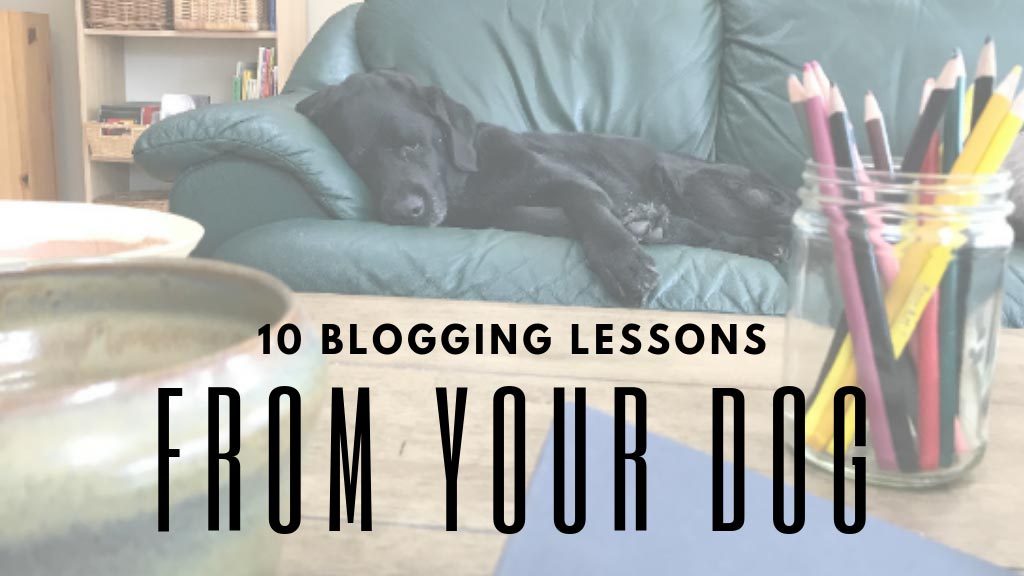
10 Blogging Lessons from Your Dog
Does your dog blog? Yes? No? Not sure? Well, don’t worry because mine does. You’re about to get 10 blogging lessons from my black Labrador retriever, Woofie, who turns 10 soon. (FYI her birthday is April 29 and she loves getting birthday notes by email. And she replies to every one!) What makes Woofie such
Marketing Coach: There Is No Blue
Where did that lead come from? “It came out of the blue…” How did that customer find you? “They found us out of the blue…” What made them call? “They called out of the blue…” How many times have you heard yourself give these types of answers? Hmmm… me too. Until last night when I
Marketing Coach: Instant Branding Toolkit
You could pay a marketing coach or ad agency or brand consultant BIG bucks to create (or recreate) your brand. A word of advice: DON’T! You need a snappy name. Something sharp, clever, clear, and concise. Something you’d be proud to have your fans and customers display on a t-shirt, coffee mug or bumper sticker.

Speaker Profit Formula: Case Study Interviews
At Do It! Marketing, we help speakers, consultants, and experts to simplify their speaking-driven business, boost their impact and increase their income by $15K-$25K per month (or more) faster than they ever thought possible. If that’s something you’re interested in, reach out and schedule a free speaker strategy call with our team at www.doitmarketing.com/call On
Marketing Coach: How to Add ROI to Every Proposal
As a marketing speaker and marketing coach, I’m often asked to review my clients’ proposals to help them land 5- and 6-figure training, speaking, and consulting contracts. The #1 most powerful strategy that will increase your hit rate no matter what you’re selling is to be clear and explicit about your client’s expected Return on

101 Sales Tips in 3 Words
Be more courageous. Stop prospecting blind. Tune your radar. Listen more deeply. Action creates traction. Try new things. Hang in there. Get better daily. Begin with enthusiasm. Finish with flair. Celebrate small wins. Eliminate wasted steps. Aim higher sooner. Never stop learning. Give, give, give. Plant seeds relentlessly. Stop wasting time. Hound dogs bark. Alpha

The (REAL) Idiot’s Guide to Social Media Marketing
As a speaker marketing expert and head honcho of an inbound marketing agency serving speakers, consultants, and thought-leading professionals, I often find myself with prospects who want to get involved in social media but – sadly – do not understand the intent, ideas, or influence factors that make social media an effective tactic in their

WIIFM is dead. Long live WNOR
For a very long time, you couldn’t sit through any marketing seminar or sales training without some moron blathering on about the radio station WIIFM – “What’s In It For Me?” as if this was cutting edge information that you had never heard before. Well, we’re changing the station, folks… because the only radio station

5 Big Shifts You Need to Make for High-Fee Success
After working with over 500 consultants, speakers, coaches, authors, and service professionals, I found 5 big shifts for mindset and skillset improvement are vital to the success of folks who are ready to make the leap to a high-fee business model. We’ll dig into the details behind all of this to get you ready to

Marketing Coach: 17 Ways to Drive More Traffic FAST
1. Tweet more regularly about resources, tools and ideas that link back to your website. Use tools like Hootsuite, TweetAdder and Buffer. 2. Create short 2-3 minute videos on YouTube and make sure to add titles near the beginning and end of the video inviting viewers to get more resources from your website. 3. Also
Keys to Digital Marketing for Solopreneurs
Guest post by Ivan Serrano Focus on relationships first Solo professionals are almost always providers of some kind of service. Whether you are freelancing, consulting or coaching, almost every gig is based on a relationship. Each of these relationships is characterized by a certain level of trust, and in every case, you must prove your

Motivational Speaker Training
https://www.youtube.com/watch?v=hzCvCZrOo-E Watch this video: What is the best motivational speaker training? Hmmmm… OK it’s two things. The best motivational speaker training is NOT about being a great speaker. It’s about the business. I’m going to give you both: The speaking answer AND the business answer. The speaking answer, and I’m a firm believer in this,
Marketing Concept: 8 Mistakes to Avoid When Naming Your Business
Guest post by Phillip Davis Naming a business is like laying the cornerstone of a building. Once it’s in place, the entire foundation and structure is aligned to that original stone. If it’s off, the rest of the building is off, and the misalignment becomes amplified. So if you have that gnawing sense that choosing
Beware the marketing coach who does not DO
OK I have to say it… I’m getting really REALLY tired of these so-called gurus and coaches who are supposedly teaching people how to “make millions as a [fill in the blank – speaker, author, infomarketer, coach, etc]” yet they have never earned a $5k+ speaking fee, they’ve never sold more than 1000 books, they’ve
Marketing Coach: 7 Musts for Your Email Signature File
My marketing coaching client was redoing his website. (Can you FEEL his exhilaration?) He just got his fresh, minty business cards back from the printer. (Can you SMELL those new cards?) During our next conference call, he asked me, “David, what should go in my email signature file?” A-ha! Trick question. What followed was my
Marketing Coach: How to Create a Great Company Name
As a marketing speaker and marketing coach, clients often ask me for branding and naming advice to help create a great company name. Where do awesome business names come from? Names like… The Cookie Machine The Video Advisor CareerNavigator SalesGPS The Coffee Hangout Guitars After Dark The Fitness Foundry I’ve seen solopreneurs and companies go
Marketing Mix: 8 Steps to Obtaining Speaking Engagements
Guest post by Steve Markman Marketing mix: Your marketing and PR efforts should be in the forefront of your organization, given today’s competitive climate and the uncertain economy. Standing out from the crowd, regardless of your organization’s industry, is a huge challenge. How can you meet this challenge? Many organizations have recognized the value of

7 Best Public Speaking Podcasts
Check out this list of the 7 best public speaking podcasts for motivational speakers, consultants, and experts who speak professionally. The most successful public speakers are always looking for that ONE new idea to help them grow their business and improve their speaking. Some of these public speaking podcasts offer tips and information to become
17 Reasons You’re Not Making Money
Had a terrific marketing mentor call with a new client who has made MILES of progress in the short time since we started working together. During our last conversation, I praised his action-orientation, and the great progress he’s made in recent weeks. He acknowledged how much better he felt about his marketing, positioning, and programs.

How Motivational Speakers Pocket Bigger Fees: Get Sponsors!
Guest column by Burt Dubin How to collect even higher speaking fees by creating alliances with sponsors… Can you believe that a perfectly simple, marvelous, easy-to- implement marketing idea can be largely ignored by the community of professional speakers? Can you imagine having an organization with deep pockets of cash promoting your programs at their

101 Success Tips in 3 Words
Drink more water. Watch less TV. Action makes traction. Try new things. Hang in there. Get better daily. Begin with enthusiasm. Finish with flair. Celebrate small wins. Eliminate wasted steps. Aim higher sooner. Never stop learning. Start fresh today. Write that letter. Practice deep listening. Pay yourself first. Seize the day. Cashflow is king. Life
Referral Blurbs – Marketing Coach Tip
What does your referral blurb look like? Excuse me? What?? You don’t know what a referral blurb is? Hmmm… don’t tell me, let me guess: YOU are not getting enough referrals You’d like to get MORE referrals but you’re not sure how You HATE asking for referrals You do GREAT work – people should just
Funny as hell business card ideas – your input needed…
Here’s the deal – a boring, plain, blah business card costs just as much to print as a funny, powerful, and attractive business card. Which category does YOUR business card fall into? Right now, I’m trying to create a creative, funny, inspirational business card that’s gonna have a strong “pass around” factor – funny as
Professional Services Marketing: 7 Ways to Build a Corporate Speakers Bureau
Publisher: PR News | Authors: Lori Zetlin and Jeanne Tee Ask any professional services marketing or corporate communications exec what she/he is doing to secure executive speaking opportunities, and the overwhelming response will be “not enough.” A savvy communications executive knows the benefits of a successful speakers program: brand development, executive visibility, product/service promotion, thought
Marketing Speaker: 21 Killer Sales Questions to Close Any Deal Faster
As a marketing speaker and marketing coach, my clients often ask me for advice on sales. Naturally, this makes a ton of sense because the MORE and BETTER marketing you do, the FASTER and EASIER your sales process becomes. BUT… Nothing frustrates me more than when my clients DO a lot of the great marketing
10 Social Media Tips for Professional Speakers
As a speaker marketing expert, and professional speaker myself, I feel it’s important not to OVER-emphasize social media… and also not to UNDER-emphasize it either. As John Jantsch likes to say, “social media is a tactic, not a religion” and I have to agree. Here are 10 social media tips for professional speakers that will
Business Coach: 50 Reasons People Should Buy from YOU
As a business coach, I love tools, strategies, templates and exercises that help small business owners sell more, more easily and more often. After reading this post, YOU will be able to build yourself one of the most powerful sales tools I’ve ever seen. (And I’ve seen a LOT of marketing/sales tools in my 20+
Marketing Coach: The 4 Levels of Marketing
When it comes to marketing, there are four things that you need to focus on, four levels if you will. The four levels of marketing are: Strategy Tactics Initiatives Action steps When you go to a conference, when you ask your mastermind group for help, even when you start searching the web for answers and
Social Media Scripts: Tips from a Marketing Coach
As you know, the LAST thing I ever want to be called is a “social media expert” or social media marketing coach. Yech. That ain’t what I do and it aint’ who I am. Ain’t. Ain’t. Ain’t. There, that feels better… now what I AM is a social media enthusiast. I love it and I
Marketing Coach: How to Write Your Kickass Bio (12 Tips and Example)
As a marketing speaker and marketing coach, my clients often ask me to critique their Professional Bio. Whether YOU are a professional speaker, consultant, coach, author, or professional services firm owner– your Bio is one of your most powerful marketing tools that will make or break your future clients’ perception of your expertise. Writing an effective,
23 things to say when you’re asked for ‘free consulting’
Brilliant advice from marketing expert Maria Marsala. Maria is a Business Builder and former Wall Street Trader. With her motto of “Powering-UP service businesses and their owners,” she provides articles, tips, classes, and resources to do just that. Learn more at www.ElevatingYourBusiness.com 1. My charge for an initial consultation is “x.” If we turn out
17 great answers to ‘How much do you charge?’
For professional services providers, entrepreneurs and thought-leading executives… the #1 dreaded question is, “How much do you charge?” Especially when it’s asked too early, out of context, and before you’ve established any sort of relationship with the prospect or any sort of value for the project… In short, if you blow the answer, your prospect is gone. Here are three things NOT to
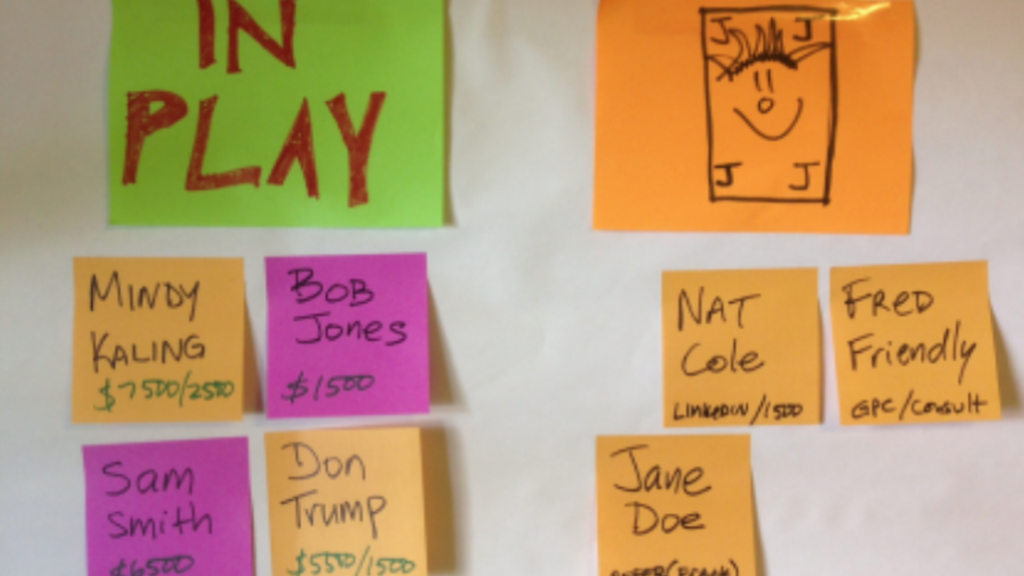
Dip
I asked one of our favorite mentoring clients, “How’s your DIP?” She responded, “Dip? We’re talking party recipes now?” “No, no – remember the acronym I shared with you last time? DIP stands for Dollars In Play.” She remembered. Then she asked me to hang on as she shuffled through some notes and papers. “Where